How accounting firms get more clients: 10 channels ranked by cost and speed
A practical guide to the client acquisition channels that work for CPA and accounting firms, from referrals and Google reviews to search ads, with what each costs in time and money.
Key takeaways
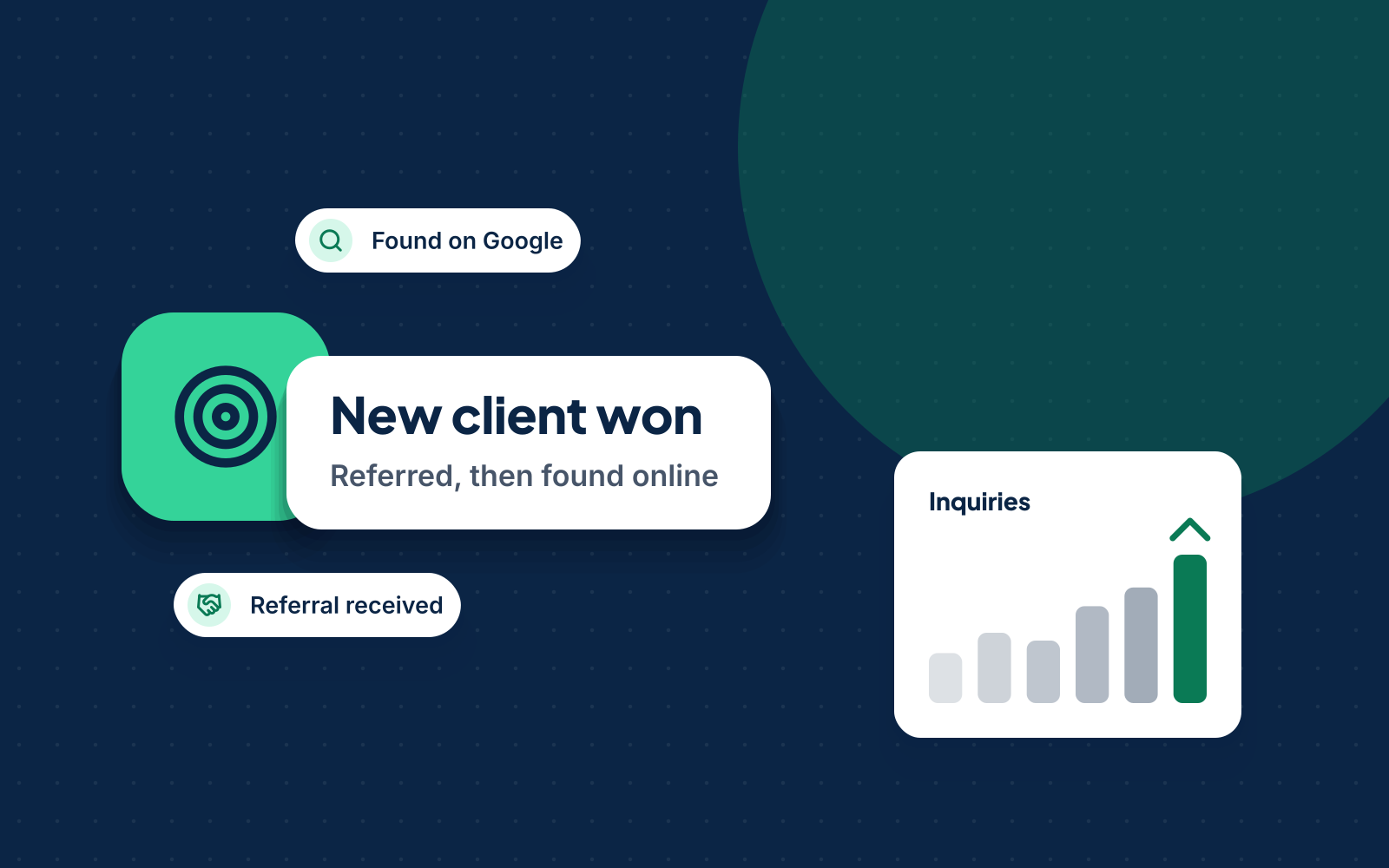
- Referrals are still the main way people find an accountant, but 87% of clients who are referred also check the firm online first, so your website and reviews decide whether a referral turns into a call.
- The cheapest new clients usually come from fixing leaks first: slow replies, thin Google profiles and no follow-up with past clients.
- Paid search works for accountants but is expensive; finance and insurance had the lowest Google Ads conversion rate of any industry in 2025, so landing pages and fast follow-up matter more than budget.
- Pick two or three channels, measure inquiries, consultations and clients won for each, and drop what doesn't pay back within a season.
In this article
Most accounting firms grow the same way: a good reputation, a few loyal referrers and a busy season that fills itself. That works until it doesn’t. Referrals plateau, a partner retires, or the firm wants different clients: more advisory, fewer one-off returns.
This guide ranks ten client acquisition channels for CPA and accounting firms by how fast they produce clients and what they cost in time and money. It starts with the cheapest wins, because most firms lose more clients to leaks than they ever lose to competitors.
First, understand how people choose an accountant
Research from the Hinge Research Institute found that 87% of clients turn to referrals first when looking for an accountant, and then check the firm online before making contact (Journal of Accountancy). In Hinge’s broader study of professional services referrals, 51.9% of referred prospects ruled out a provider before ever speaking to them (Hinge).
So the real buying journey looks like this:
- Someone recommends you, or the prospect searches for “accountant near me.”
- They look at your website, Google profile and reviews.
- They contact two or three firms.
- They choose the one that replies fast and seems to understand their situation.
Every channel below feeds step 1. But steps 2 to 4 decide whether you win. That’s why the first three “channels” are really fixes.
The 10 channels, ranked
| # | Channel | Speed to results | Cost | Best for |
|---|---|---|---|---|
| 1 | Faster inquiry follow-up | Days | Low | Every firm |
| 2 | Past-client reactivation | Weeks | Low | Firms with a client list |
| 3 | Google Business Profile and reviews | 1–3 months | Low | Local and individual clients |
| 4 | Referral program | 1–3 months | Low | Firms with happy clients |
| 5 | Website that converts | 1–2 months | Medium | Every firm |
| 6 | Cross-selling existing clients | Weeks | Low | Firms wanting advisory work |
| 7 | Google Search ads | Days | High | Clear, high-value services |
| 8 | Local SEO and service pages | 3–9 months | Medium | Long-term demand |
| 9 | LinkedIn and partner networks | 3–6 months | Medium | Business and advisory clients |
| 10 | Outbound to a niche | 1–3 months | Medium | Firms with a clear niche |
1. Reply faster to the inquiries you already get
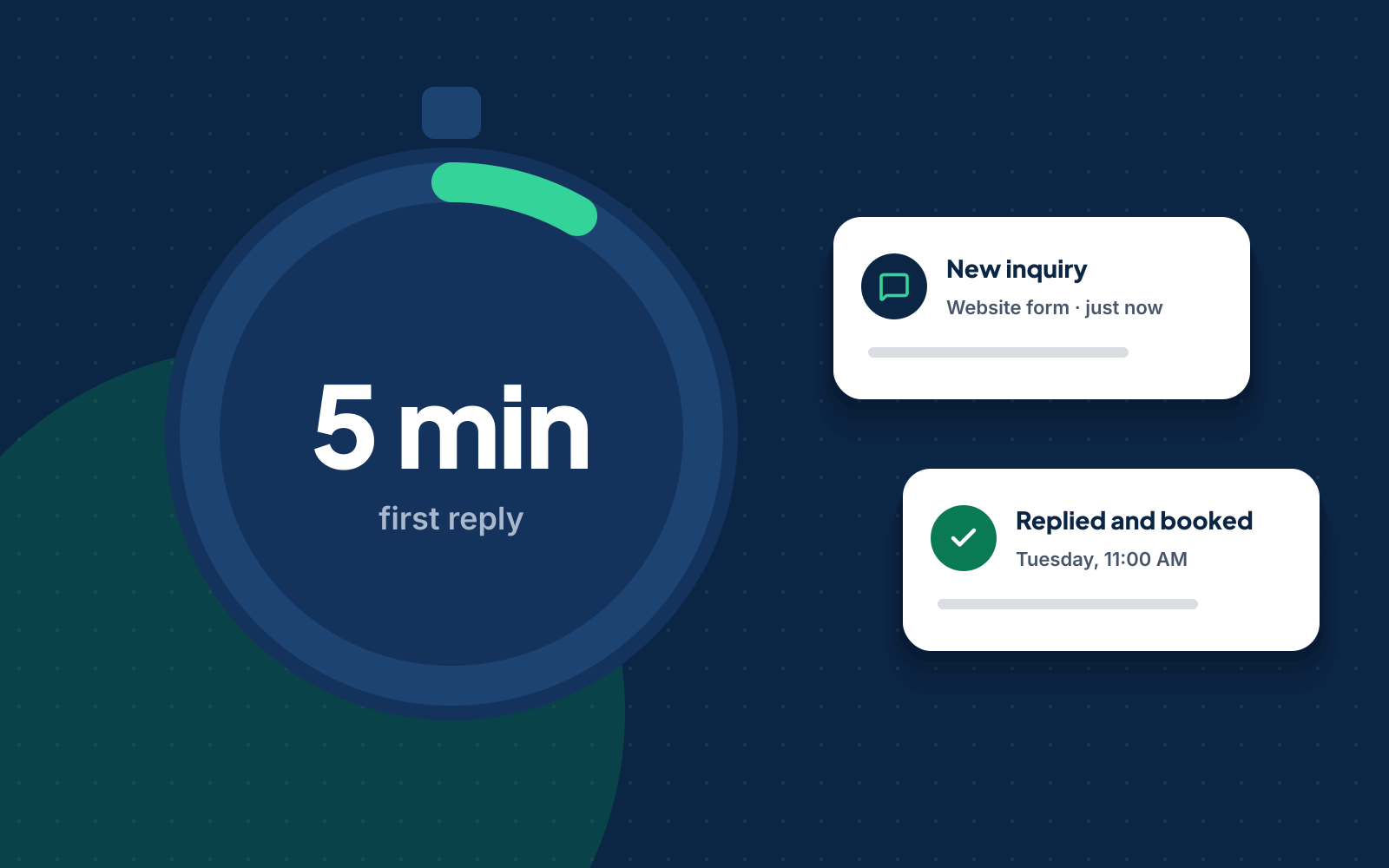
In an audit of 2,241 companies, only 37% replied to a web inquiry within an hour, and firms that did were nearly 7 times more likely to qualify the lead (HBR). For an accounting firm in busy season, inquiries can wait days. Fixing this costs almost nothing and often produces the quickest wins of anything on this list.
2. Reactivate past clients
Every firm has clients who didn’t come back last year. Some moved to software, some forgot, some had a bad experience. A personal note before the season, with an easy way to book, brings a share of them back. Keeping clients is far cheaper than finding new ones: Xero puts winning a new accounting client at 5 to 25 times the cost of keeping one (Xero).
3. Google Business Profile and reviews
When people search for an accountant nearby, the map results and star ratings are the first thing they see. In BrightLocal’s 2026 survey, 74% of consumers looked for reviews written in the last three months, and 31% would only use businesses rated 4.5 stars or higher (BrightLocal). A complete profile and a steady flow of genuine reviews is one of the best returns in local marketing.
4. A simple referral program
Most happy clients would refer you; few are ever asked. A referral program means asking at the right moments (after a refund arrives, after a problem is solved), making it easy to introduce someone, and thanking referrers in a way your professional rules allow.
5. A website that turns visitors into calls
Referred prospects check your site. A good accounting website says exactly who you serve, which services you offer, what working with you costs or how pricing works, and how to book. It loads fast on a phone and has a short form and a click-to-call button on every page.
6. Cross-sell to existing clients
ClearlyRated’s 2026 research found that 91% of accounting clients want proactive advice, but only 4% describe their firm as mainly advisory (ClearlyRated). Offering planning, bookkeeping, payroll or advisory to clients who only buy tax prep is often the fastest way to grow revenue without new clients at all.
7. Google Search ads
Search ads put you in front of people actively looking for “small business accountant” or “tax preparer near me.” They work, but they’re expensive: WordStream’s 2025 benchmarks put finance and insurance among the highest-cost categories and at the lowest conversion rate of any industry, 2.55% (Search Engine Land). Ads pay off when they send traffic to a focused landing page and every inquiry gets a fast reply.
8. Local SEO and service pages
Pages for each core service and location (“S corporation tax preparation in [city]”) build demand you don’t pay for per click. This is slower, often three to nine months, but it compounds.
9. LinkedIn and partner networks
For business clients, relationships with bankers, attorneys, financial advisors and industry associations still produce the best-fit introductions. LinkedIn helps you stay visible to those partners and to business owners between meetings.
10. Outbound to a clearly defined niche
If you specialize, say in dental practices, construction firms or e-commerce brands, a short, researched outreach campaign to businesses in that niche can fill a pipeline. It only works when the message shows you understand their world.
How to choose your channels
Don’t try all ten. Use this order:
- Fix the leaks first (channels 1–3). They make every other channel more profitable.
- Add one channel that compounds (referrals, SEO or partners).
- Add one channel that’s fast if you need clients this season (search ads or outbound).
Then measure each channel the same way: inquiries, consultations booked, clients won and fees per client. Keep what pays back within a season; rework or drop the rest.
A 90-day plan
- Weeks 1–2: Set up fast inquiry follow-up and tracking. Complete your Google Business Profile.
- Weeks 3–6: Contact last year’s clients who didn’t return. Start asking for reviews after every completed engagement.
- Weeks 7–10: Improve your top three service pages and add a clear booking option.
- Weeks 11–13: Launch one growth channel (search ads, referrals or outbound) and review results weekly.
What to do this week
- Count how many inquiries you got last month and how many became clients.
- Send a test inquiry to your own firm and time the reply.
- List last year’s clients who didn’t return.
- Check your Google rating and the date of your most recent review.
- Choose the one channel you will add next quarter.
Sources
- Hinge Research Institute research on how clients find accountants, via Journal of Accountancy
- Hinge Marketing, referral marketing research for professional services
- BrightLocal Local Consumer Review Survey 2026
- WordStream by LocaliQ 2025 Google Ads benchmarks, via Search Engine Land
- Harvard Business Review, “The Short Life of Online Sales Leads” (2011)
- ClearlyRated 2026 Accounting Buyer Insights Report
- Xero, accounting firm performance guide
How we write our insights
Written by the InventaxAI Editorial Team, the people who build websites, run lead follow-up and plan retention campaigns for finance and tax firms. Every number links to its original source, and we don’t invent statistics, case studies or reviews. Last reviewed .
This article is general information, not legal, tax or financial advice. Marketing and contact rules differ by country and profession, so check the rules that apply to your firm.